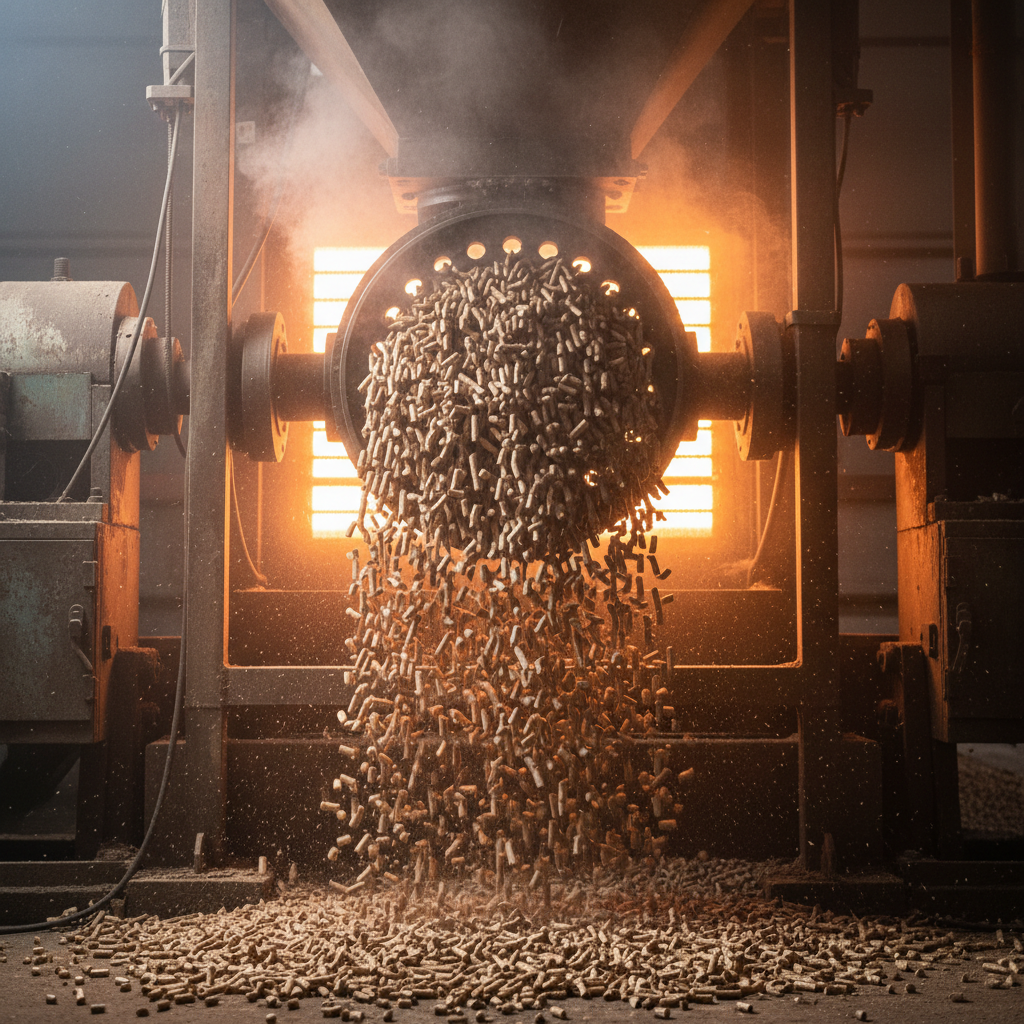
Die temp: 85–95°C
Press PSI: 15,000
Output: 6.5 t/hr
From Forest Residual
to 18.5 MJ/kg.
Hammer-milled, kiln-dried, and compressed at 15,000 PSI from certified sawmill residuals and forestry thinnings. Consistent quality. Measurable energy.
120,000t/yr
Annual Capacity
<0.5%
Ash Content
≤8%
Moisture Content
Manufacturing Process — 7 Stages
How Waste Becomes Energy.
Click any stage to expand equipment specs, throughput data, and process parameters. Each step is audited quarterly by Bureau Veritas.
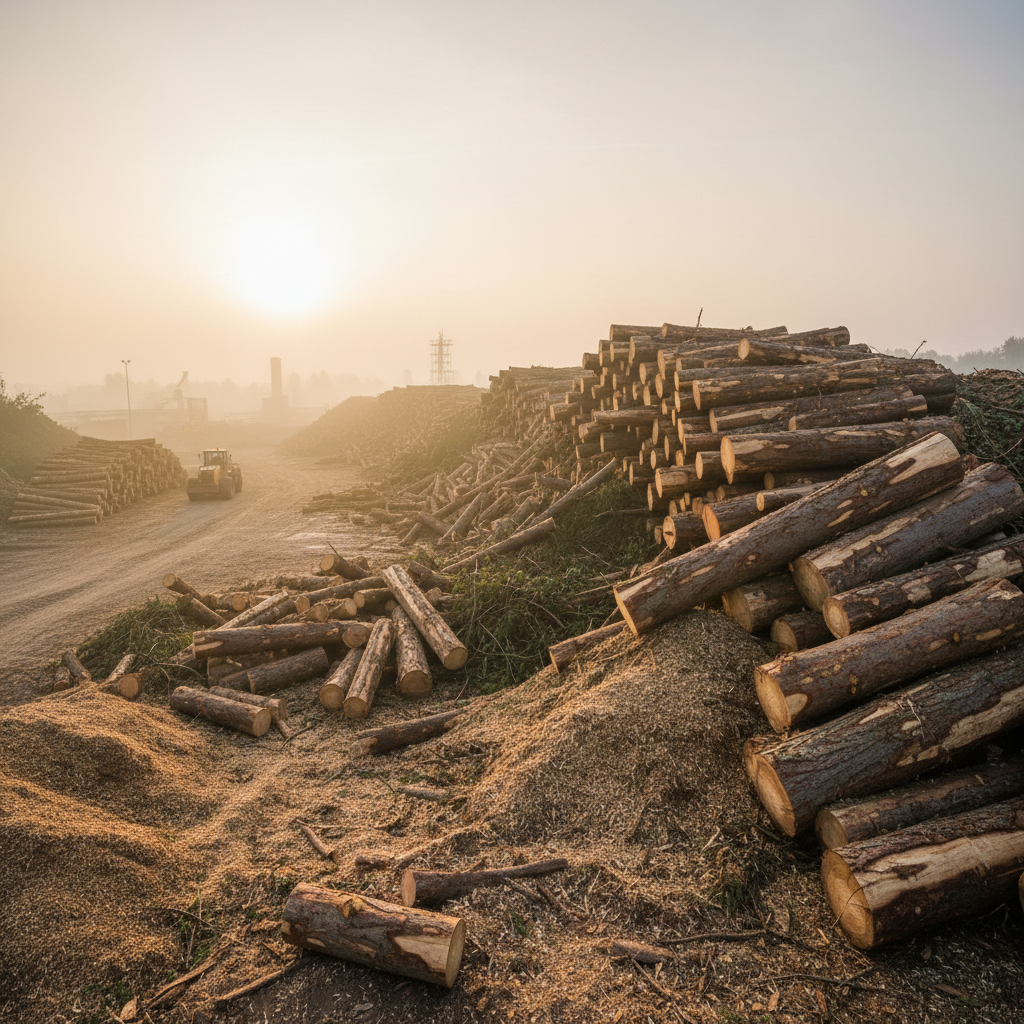
Certified sawmill offcuts and forestry thinnings arrive from FSC-audited supply chains within a 120 km radius. Each load is weighed, moisture-sampled, and assigned a batch ID before entering the covered feedstock bay.
Equipment
Radial stacker, moisture analyser, RFID batch scanner
Stage Parameters
≤120 km
Feedstock Radius
35–55%
Moisture In
480 t/day
Daily Intake
FSC CoC
Batch Traceability
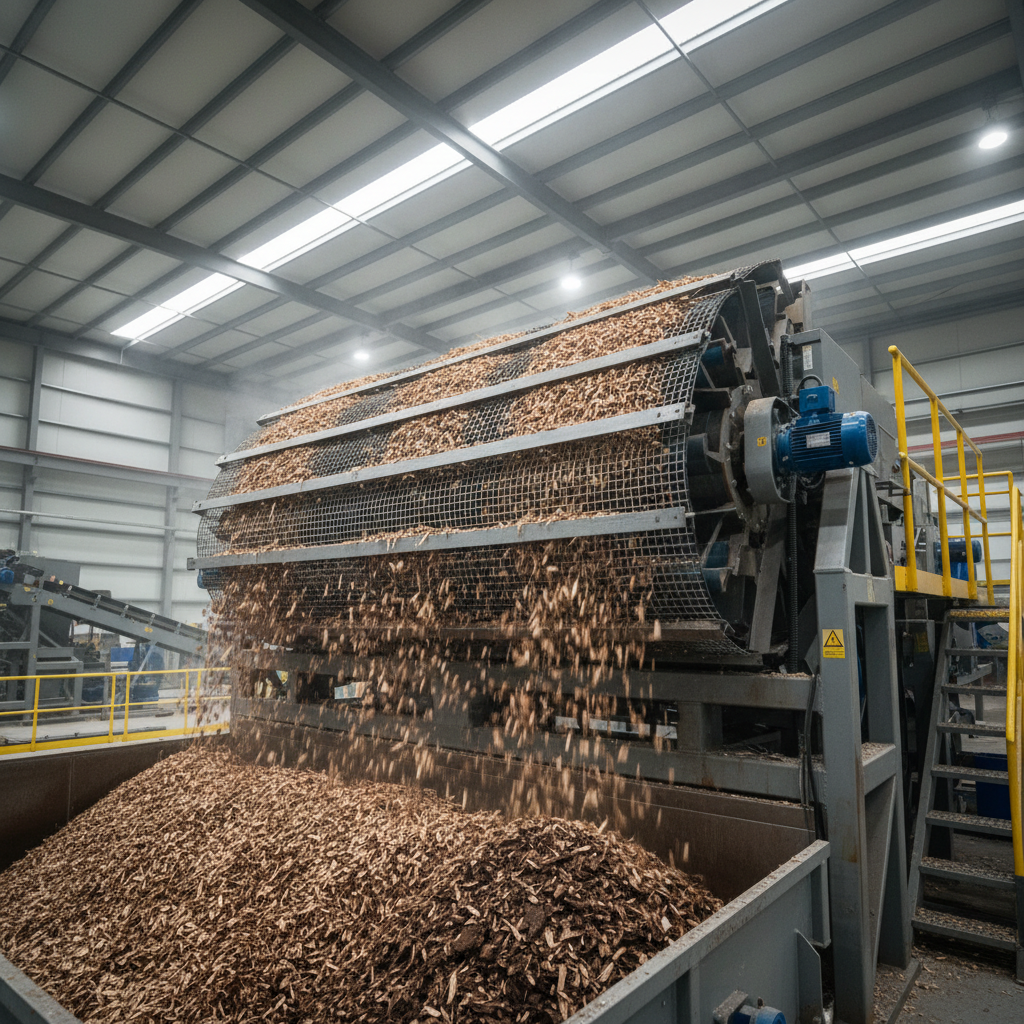
Incoming material passes over a vibrating deck screen and magnetic separator. Oversized bark, stones, and metal are removed. Clean woody fraction advances to the hammer mill circuit. Rejects are composted on-site.
Equipment
Rotary trommel, rare-earth drum magnet, eddy current separator
Stage Parameters
50 mm top / 8 mm bottom
Screen Aperture
100% Fe, non-Fe
Metal Removal
<3% by mass
Reject Rate
550 t/hr screen capacity
Throughput
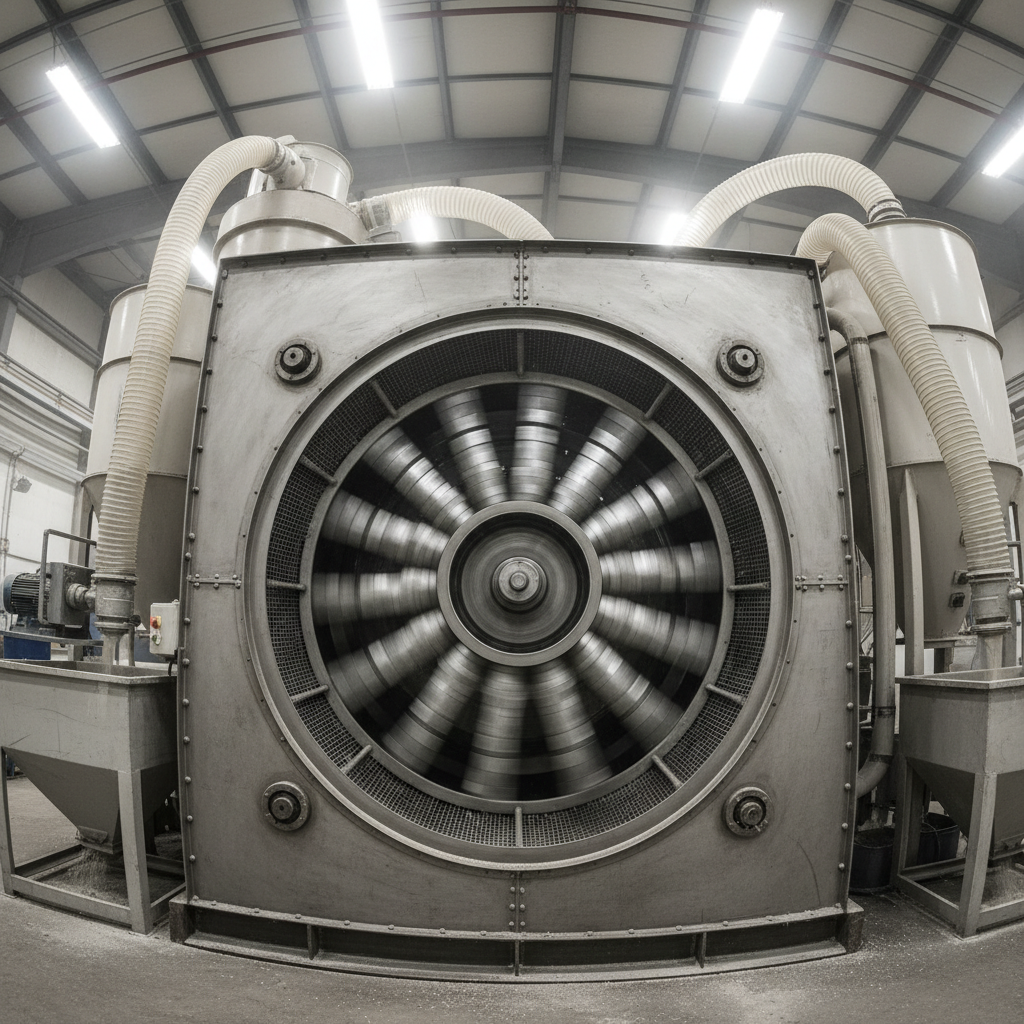
Cleaned chips enter the hammer mill at 1,450 RPM. Hardened steel hammers reduce material to a particle size of 3–4 mm — the optimal fiber length for die compression. The mill room runs at 92 dB. Cyclone dust collection captures all airborne fines.
Equipment
4× Andritz 315 kW hammer mills, cyclone dust collection, screw conveyor
Stage Parameters
1,450 RPM
Rotor Speed
3–4 mm
Particle Size Out
315 kW per unit
Power Draw
4 parallel mills
Units Running
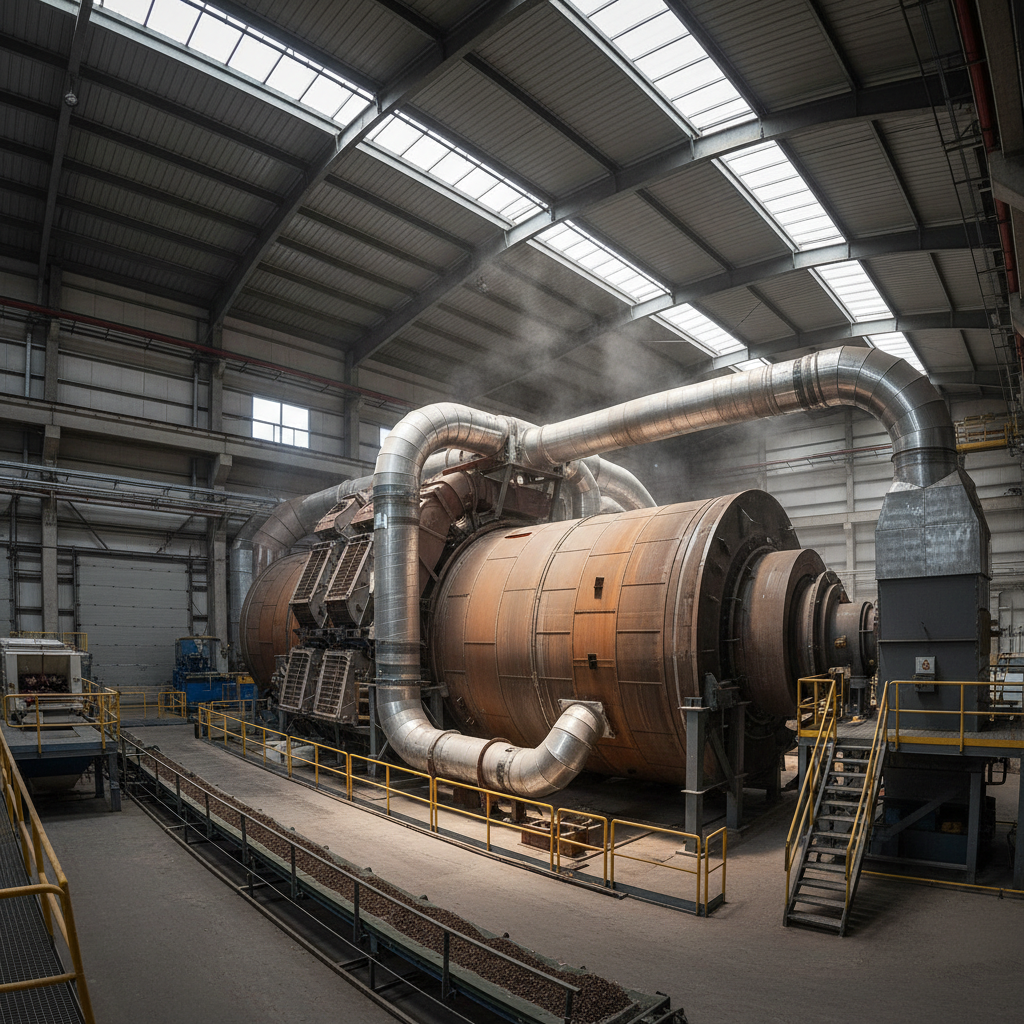
Milled fiber enters a triple-pass rotary drum dryer operating at 350–450°C inlet temperature. Exhaust heat from the pellet mill powers the dryer, reducing gas consumption by 38%. Output moisture is controlled to ±0.5% of target.
Equipment
Triple-pass rotary drum, baghouse filter, heat exchanger, moisture sensor array
Stage Parameters
350–450°C
Inlet Temp
8% ±0.5%
Moisture Target
24 m triple-pass
Dryer Length
38% from press exhaust
Heat Recovery
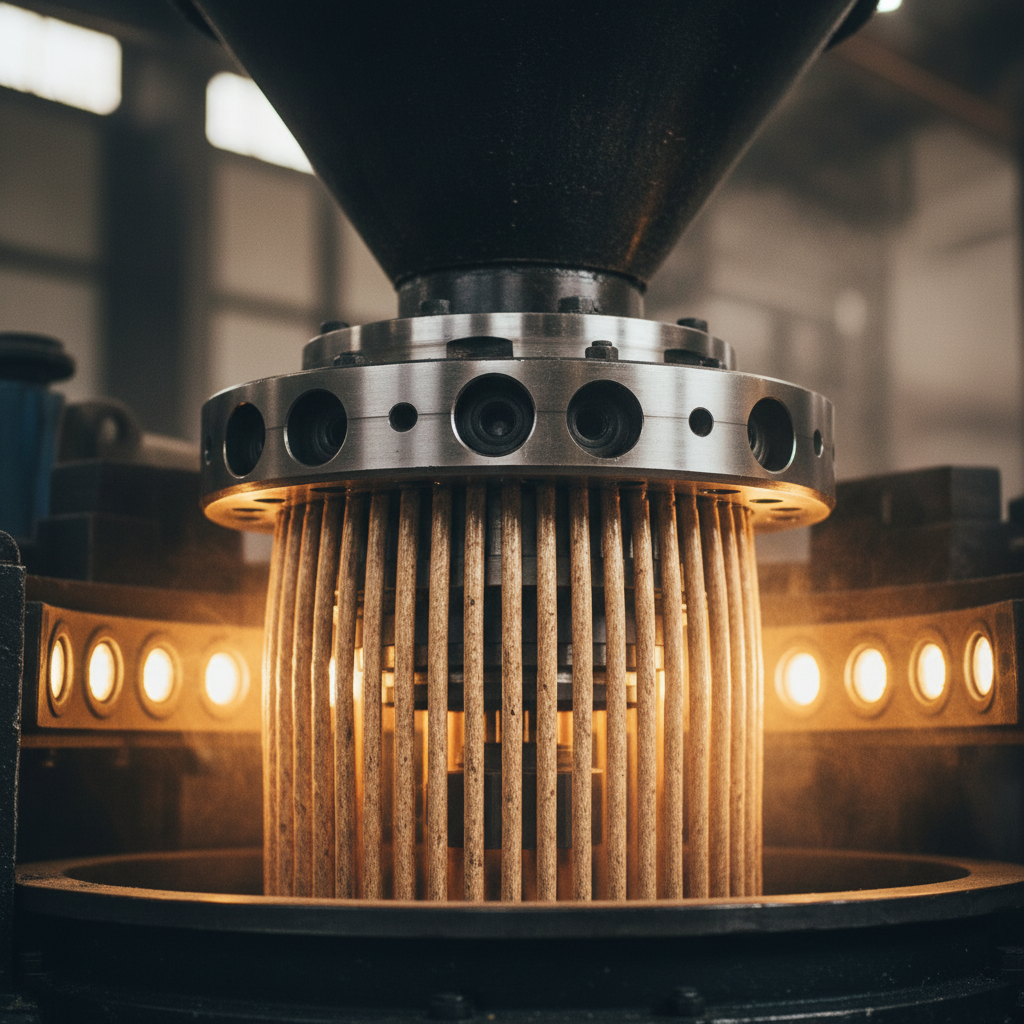
Conditioned fiber enters the ring-die press at 80–90°C. Rollers force material through 6 mm die holes at 15,000 PSI. Lignin in the wood fibers melts and re-bonds on exit — no binding agents required. Pellets emerge at 95°C, dense and uniform.
Equipment
6× CPM 9800 ring-die presses, automated die change system, inline NIR analyser
Stage Parameters
15,000 PSI
Die Pressure
6 mm ±0.3 mm
Die Diameter
90–95°C
Exit Temp
650–700 kg/m³
Bulk Density
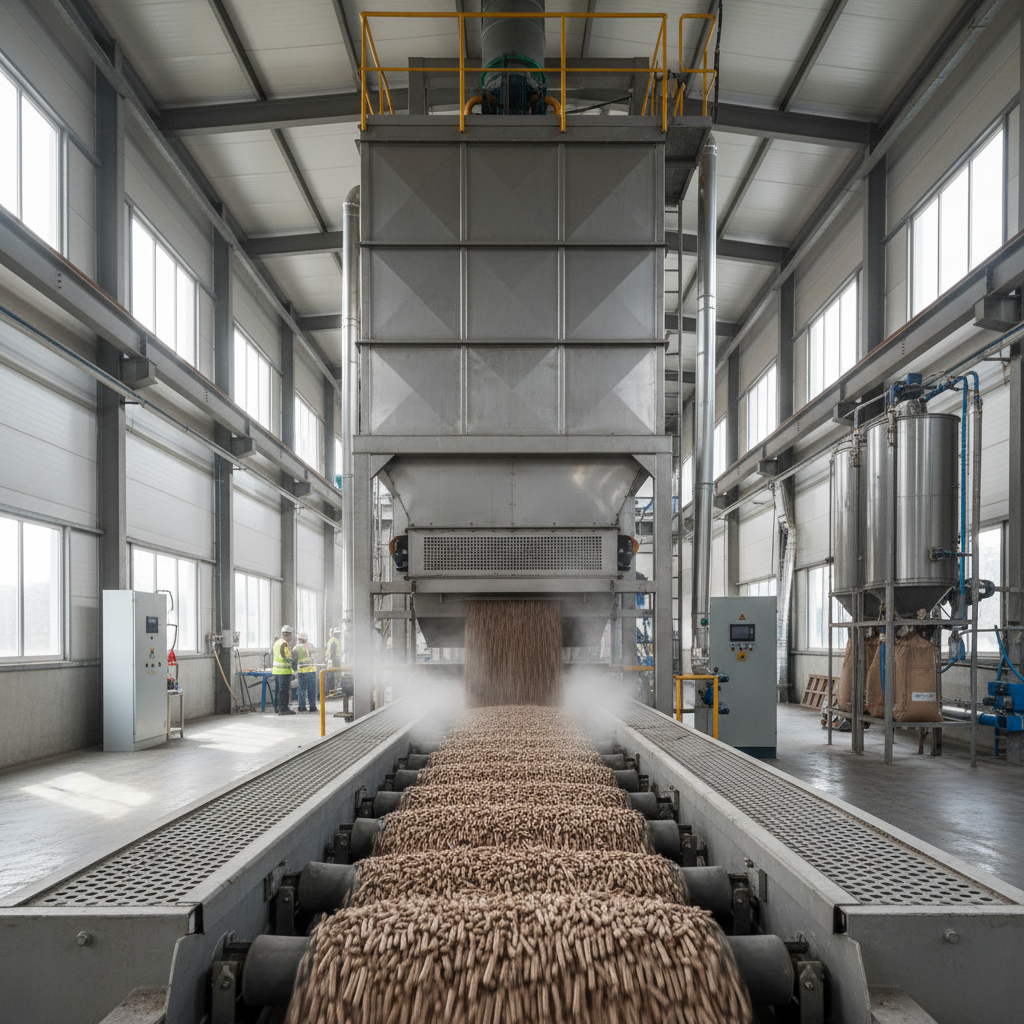
Hot pellets pass through a counter-flow cooler for 12–15 minutes. Air drawn upward through the pellet bed removes residual moisture and locks the compressed structure. Pellets exit at ≤5°C above ambient — ready for durability testing.
Equipment
Bühler counter-flow cooler, vibrating sieve, pneumatic fines return
Stage Parameters
12–15 min
Cooling Time
Ambient +5°C
Exit Temp
≥97.5% DU (ENplus A1)
Durability
<1%
Fines Post-Cool
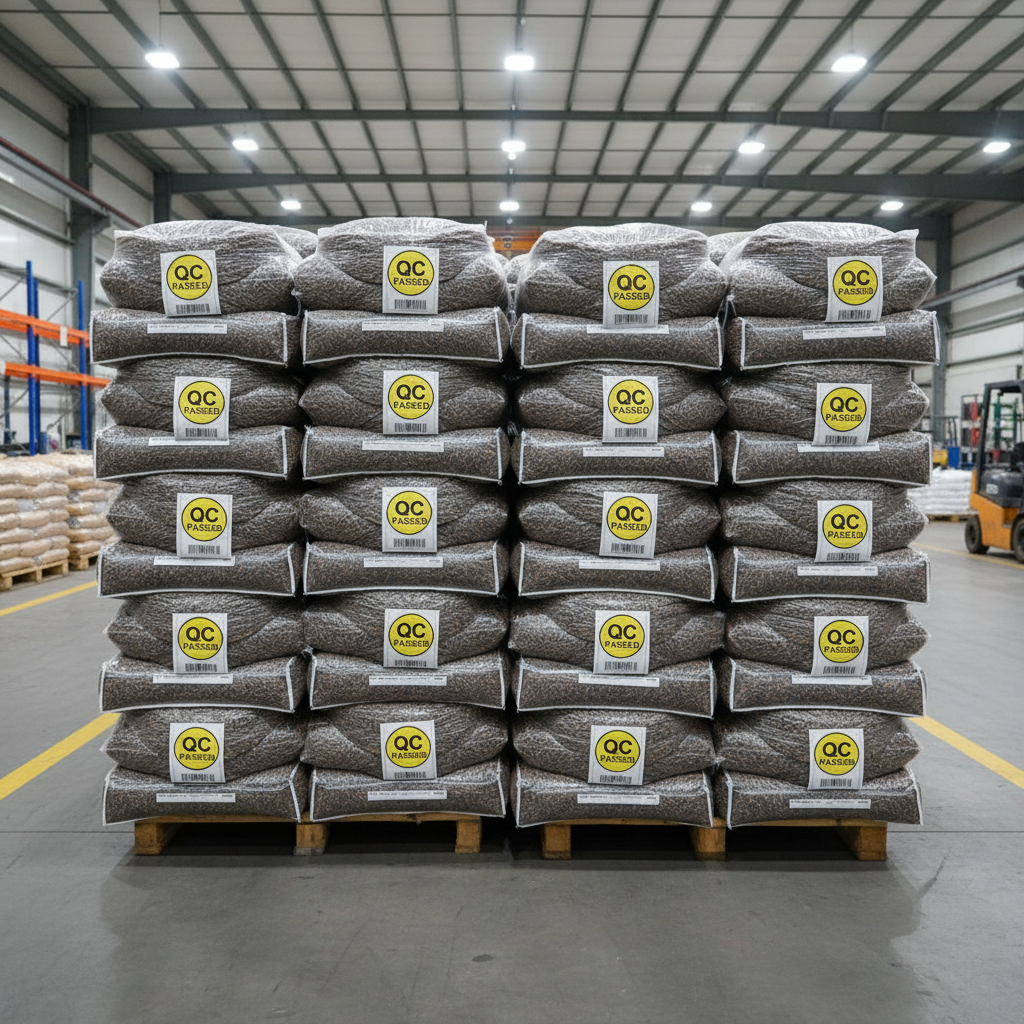
Finished pellets are sampled every 30 minutes per EN ISO 18135. Calorific value, moisture, ash, and durability are logged to our QA system. Product ships in 15 kg consumer bags, 1,000 kg big bags, or bulk pneumatic tankers to biomass plants.
Equipment
Automated bagging line, robotic palletiser, pneumatic bulk load-out
Stage Parameters
Every 30 min
QC Frequency
≥18.5 MJ/kg (net)
Calorific Value
<0.5%
Ash Content
15 kg / 1t bag / bulk
Shipping Formats
Technical Datasheet — ENplus A1
Product Specifications.
Net Calorific Value
18.5
MJ/kg — Exceeds ENplus A1 minimum
Equivalent to 4.4 litres of heating oil per 20 kg bag. Tested per ISO 18125 on every production batch.
Certifications & Standards
ENplus A1
European Pellet Council — GB-093-xxxx
FSC Chain of Custody
Forest Stewardship Council — FSC-C12xxxx
ISO 17225-2
International Organization for Standardization — Class A1
SBP Compliant
Sustainable Biomass Program — SBP-2025
15 kg Bags
Retail & small commercial. Palletised 65 bags / 975 kg. Shrink-wrapped for weather resistance.
1,000 kg Big Bags
Regional distributor fill. FIBC woven polypropylene. Fits standard forklift or crane hook.
Bulk Pneumatic
Direct biomass plant supply. Road tanker 28 t payload. Silo blow-in at 40 m³/min.
Environmental Accountability
The Cause Behind the Product.
Waste into energy. Residuals that would decompose — releasing carbon — are instead compressed into fuel that displaces fossil sources.
Lifecycle Emissions Comparison
92% fewer emissions than coal.
Source: IPCC AR6, RED II Annex V. Lifecycle analysis includes transport and processing.
Carbon Neutrality under RED II Directive
Our pellets meet the 80% GHG savings threshold required for EU renewable energy qualification. Full LCA report available on request.
Secondary Path — Lighter Intent
Download Our Spec Sheet.
Full technical datasheet: calorific values, ash content, bulk density, moisture specs, certification documents, and logistics parameters.
PDF includes: EN ISO 17225-2 compliance table · Ash & moisture test results · Bulk logistics guide
Current Supply Relationships
Drax Group plc
45,000 t/yr framework — Yorkshire, UK
Vattenfall Heat
28,000 t/yr — Berlin district heating
Ørsted Bioenergy
62,000 t/yr — Avedøre, Denmark
Prefer to speak directly?
Our procurement team is available Mon–Fri, 07:00–17:00 CET.